
Why Mercor bought Deeptune
0 of 66 tracked occupations have a corresponding RL environment
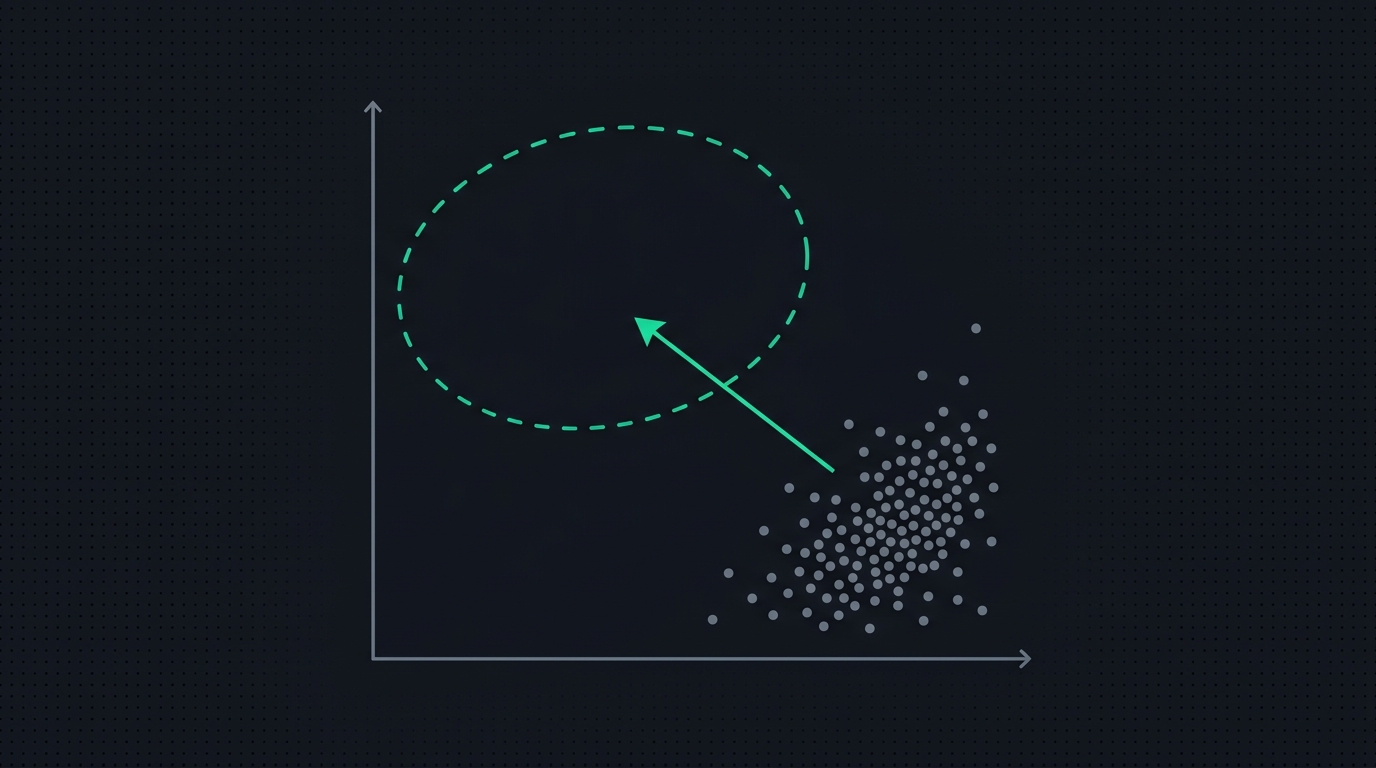
Mercor’s Deeptune acquisition says the constraint has shifted from expert networks to the environments themselves. On July 9, Mercor announced the acquisition of Deeptune, a vendor that had raised $43M from a16z in March 2026 and spent two years recreating hundreds of enterprise applications, from spreadsheets to Salesforce. Mercor said it outright: the bottleneck is no longer the experts, it’s the software layer they work in. Our vendor data confirms the whitespace the deal targets. 0 of 66 tracked occupations have a corresponding RL environment. The market is crowded where it is easy and empty where it matters.
Key Takeaways
- Mercor ($10B valuation) acquired Deeptune, which raised $43M from a16z in March 2026 and spent two years recreating enterprise applications as agent environments.
- The acquisition thesis: expert networks were never the bottleneck. The recreated software layer those experts work in was.
- 0 of 66 occupations we track have a corresponding RL environment, and the same week OpenAI cited a vendor benchmark in its GPT-5.6 release. Both layers are consolidating toward trusted vendors.
What did Mercor acquire?
Deeptune spent two years recreating enterprise applications, spreadsheets, Salesforce, and other business software, as simulated environments for training and evaluating AI agents. The company raised $43M from a16z in March 2026. Mercor, valued at $10B after a $350M Series C, acquired it on July 9.
The research world had already shown why that asset matters. ServiceNow’s WorkArena benchmarks agents inside a real enterprise platform, and CMU’s TheAgentCompany built an entire simulated software company and watched frontier agents complete only about 30% of realistic work tasks. The lineage runs back through WebArena’s self-hosted replica websites: if you want agents that do enterprise work, you need the enterprise software, faithfully recreated and instrumented.
The acquisition thesis is straightforward. Mercor’s expert network, the labor supply generating roughly $2B in annualized gross payment volume at a 27% gross margin, was never the bottleneck. The bottleneck was the software layer those experts work in. Without recreated enterprise applications, experts can write rubrics and grade outputs, but they can’t train agents to navigate real workflows. Deeptune built that layer. Mercor bought it.
What does the vendor data show?
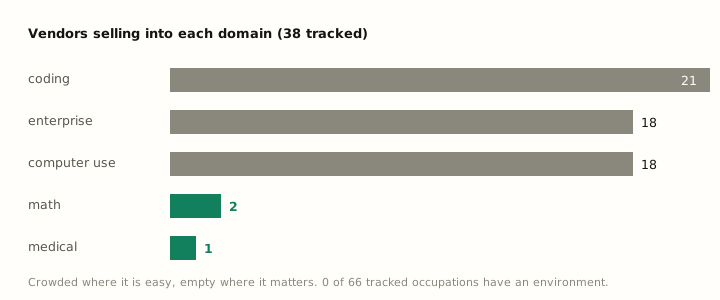
Our vendor census maps 38 tracked environment companies by domain, and the distribution is lopsided. Math has two sellers, Prime Intellect and Sepal AI. Medical has effectively one dedicated vendor, Centific, which ships MedSim as part of its RL Environments-as-a-Service product launched in March 2026.
The whitespace is not in coding. It’s in the domains where enterprise software is hard to recreate and domain expertise is hard to source:
- payroll administration
- medical billing
- insurance claims adjusting
- freight dispatch
- hotel property management
These domains are genuinely unoccupied. No agent environment exists for any of them under any phrasing.
What does the occupation data show?
We track 66 occupations. Zero have a corresponding RL environment simulating their work. The occupations span customer service, accounting, biomedical engineering, radiology, forensic science, construction trades, and 60 others. The environment catalogue holds 99 entries, but none map to an occupation-level workflow.
The capability data says the gap is not for lack of headroom: on OSWorld, the benchmark of open-ended tasks in real operating systems, humans clear 72% while the best agents at release managed about 12%. This is the gap the Deeptune acquisition targets. Recreated enterprise applications are the substrate on which occupation-level environments get built. Mercor now owns both the expert network that defines what correct work looks like and the software layer that simulates where the work happens.
What does the consolidation math say?
When 31 of 38 vendors are sub-50-person shops, a $10B buyer acquiring the tooling layer resets what independents must offer. A vendor selling coding environments, the crowded part of the market, now competes with Mercor’s expert network plus Deeptune’s recreated applications. The independents that survive will own domains Mercor cannot reach through credential networks: payroll administrators, dental billers, claims adjusters, the occupations where the experts don’t work at labs and aren’t reachable through existing marketplaces.
The same week delivered the other signal. OpenAI’s GPT-5.6 release cited Surge’s GDP.pdf benchmark, with the flagship scoring 30.7% on professional document tasks. Vendor evals now appear in lab release notes. The measurement layer and the environment layer are both consolidating toward the vendors labs already trust.
What this means
The constraint shifted from experts to environments. Mercor bought the environment layer. The vendors that remain independent must own what Mercor cannot: domains where ground truth exists by construction and labs cannot staff the expertise internally.
FAQ
What is Deeptune?
Deeptune was an RL environment vendor that spent two years recreating enterprise applications as simulated environments for AI agent training. It raised $43M from a16z in March 2026 and was acquired by Mercor on July 9, 2026.
Why does 0 of 66 occupations matter?
None of the 66 tracked occupations has a corresponding RL environment that simulates its end-to-end workflow. The gap between what occupations exist and what environments cover is the addressable market for environment builders.
What is GDP.pdf?
GDP.pdf is a Surge AI benchmark for professional document tasks. OpenAI’s GPT-5.6 release cited it, with the flagship model scoring 30.7%. Vendor benchmarks appearing in lab release notes is the signal that vendors are becoming frontier infrastructure.